
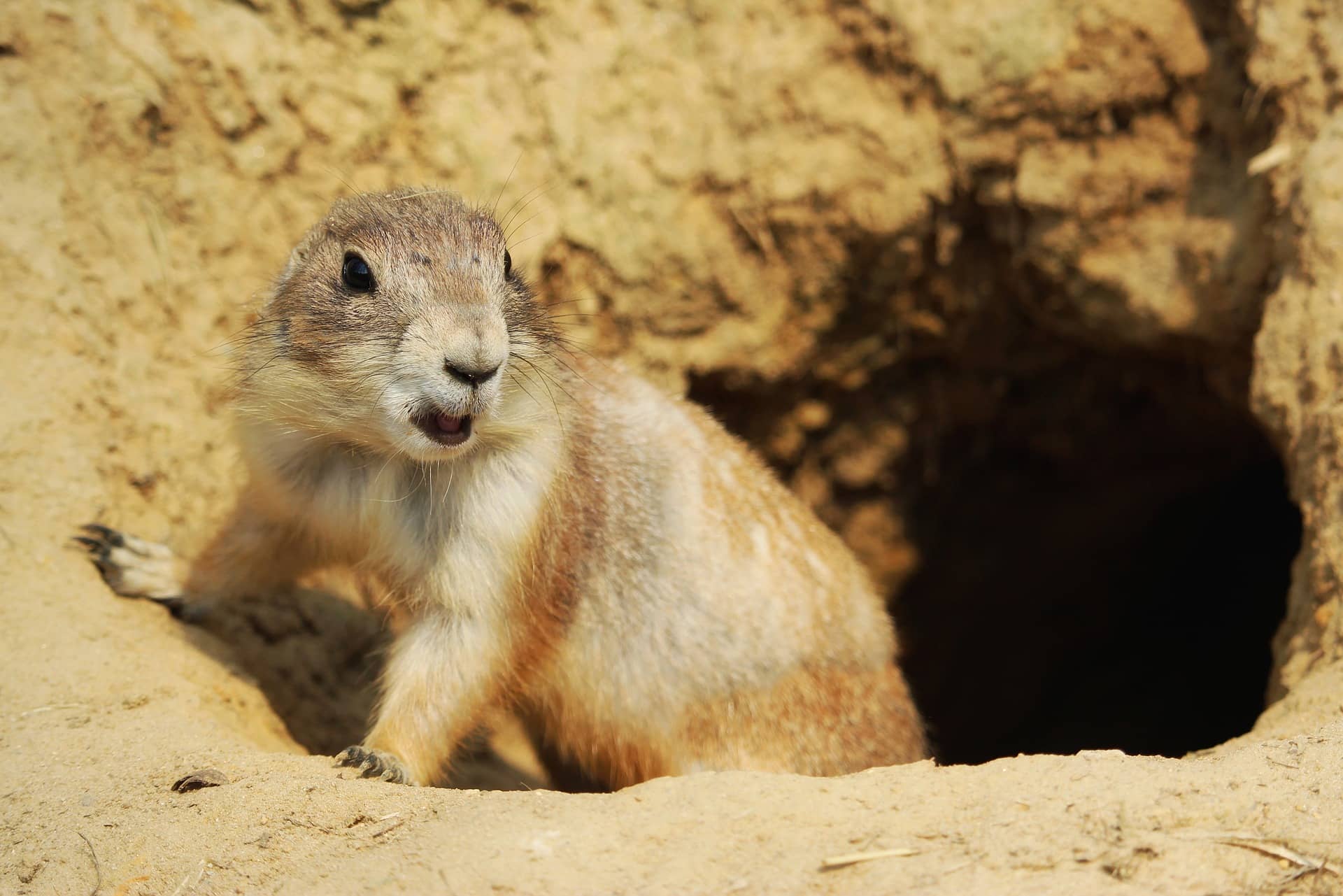
Услышав слово «луговая собачка», вы, скорее всего, не подумаете о грызуне. Однако луговые собачки больше похожи на обычных крыс, чем на настоящих собак. Названные так из-за своих уникальных звуков, похожих на собачий лай, эти животные демонстрируют уникальное социальное поведение, которое выделяет их среди других. Помимо сложной формы коммуникации, у этих обитающих в прериях существ есть множество других интересных особенностей. Узнайте больше об этих милых и любопытных животных, ознакомившись с этими интересными фактами.
- Луговые собачки в основном обитают на высоте от 2000 до 10 000 футов (610–3048 м) над уровнем моря.
- Луговые собачки могут прожить в неволе до 10 лет.
- Длина луговых собачек от головы до хвоста составляет от 12 до 16 дюймов (30–40 см).
- Обычно они весят от 1 до 3 фунтов (от 0,5 до 1,5 кг).
- Самки луговых собачек могут размножаться в возрасте от 1 до 2 лет.
- Луговые собачки — преимущественно дневные грызуны.
- Они обитают только в Северной Америке.
- Луговые собачки предпочитают сухие места обитания и никогда не живут во влажных районах.
- Это разновидность сусликов.
- Самцы луговых собачек обычно крупнее и тяжелее самок.
- Существует пять видов луговых собачек: чернохвостая, мексиканская, луговая собачка Ганнисона, белохвостая и луговая собачка Юты.
- Как и большинство плацентарных млекопитающих, они обладают дихроматическим цветовым зрением.
- Период их беременности длится около месяца.
- В дневниках экспедиции Льюиса и Кларка описаны два вида луговых собачек.
- Мериуэзер Льюис описал чернохвостую луговую собаку как «лающую белку».
- Несмотря на то, что в их названии есть слово «собака», они не состоят в близком родстве с собаками и другими псовыми.
- Название рода Cynomys происходит от греческого слова, которое переводится как «собачья мышь».
- Выражение «прерийные собаки» относится к людям, которые одновременно выглядывают из-за перегородок в ответ на шум, подобно тому, как луговые собачки высовывают головы из нор, чтобы посмотреть, нет ли поблизости хищников.
- Старое прозвище луговых собачек — «дерновый пудель» — легло в основу названия техасской бейсбольной команды Amarillo Sod Poodles.
- Самки луговых собачек в период течки вылизывают свои гениталии, чтобы предотвратить инфекции и заболевания, передающиеся половым путём.
Луговые собачки приветствуют друг друга поцелуями и обнюхиванием.
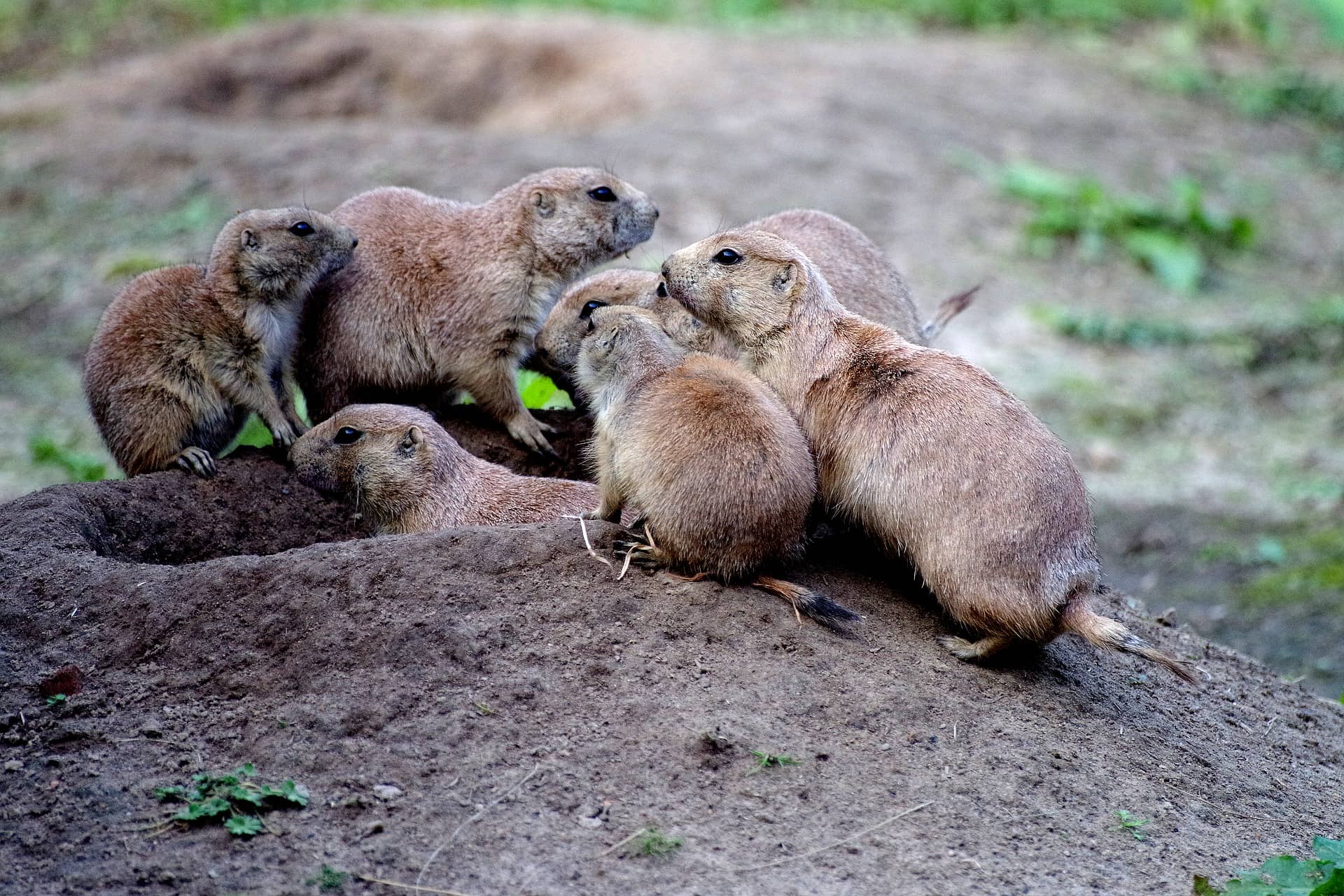
Они живут большими колониями или городами.
У них очень сложный язык.
Семейства луговых собачек называют либо стаями, либо кланами.
Луговые собачки полигамны.
Самки луговых собачек остаются со своими сородичами на всю жизнь.
Иногда они по ошибке заботятся о чужих детях.
Основной причиной смерти детёнышей луговых собачек является детоубийство.
Луговые собачки расчищают территорию вокруг своих нор, чтобы лучше видеть приближающихся хищников.
В их норах есть помещения, предназначенные для определённых целей.
Луговые собачки устраивают в своих норах наблюдательные пункты.
В норах луговых собачек живут и другие животные.
В их норах хорошая вентиляция.
Черноногие хорьки в основном питаются луговыми собачками.
Некоторые люди держат луговых собачек в качестве экзотических домашних питомцев.
Они принимают пылевые ванны, чтобы избавиться от паразитов.
Луговые собачки спариваются только раз в год.
They can give birth to up to eight pups at a time.
After mating, male prairie dogs prevent other males from mating with female prairie dogs.
They are highly sensitive to sound.
They get water just from eating plants.
Prairie dogs are a keystone species.
The Gunnison’s prairie dog is the only prairie dog species with 40 chromosomes.
Black-tailed prairie dogs do not hibernate.
They defend their territories against other prairie dogs.
They kill ground squirrels to eliminate competition.
Prairie dogs are susceptible to the plague.
Many farmers don’t like them because of their destructive tendencies.
Some prairie dog species are endangered.
The CDC lifted the ban on their trade and hunting in 2008.
Prairie dogs greet each other by kissing and nuzzling.
One of the cutest facts about prairie dogs is that these highly social animals “kiss” and nuzzle each other when they enter new areas. While they don’t have lips to lock, they usually touch their noses and teeth against each other as a greeting. This way, they can identify each other and tell whether they’re from the same family group.

They live in large colonies or towns.
Prairie dogs are social animals that have complex relationships with others of their kind. They live in large colonies which people refer to as a prairie dog village or prairie dog town. These towns occupy a large area of land, housing large numbers of prairie dog families. Most notably, one prairie dog town in Texas reportedly spanned around 25,000 square miles (64,000 km²) with 400,000,000 individual black-tailed prairie dogs (Cynomys ludovicianus).
They have a highly sophisticated language.
One of the most impressive prairie dog facts is that their bark-like calls are part of their unique and sophisticated language. After humans, prairie dogs have one of the most complex forms of vocal communication in the animal kingdom. When it comes to vocal complexity, they even surpass some of the most intelligent animals such as dolphins and chimpanzees. Not only do prairie dogs have a general call for danger, but they can also describe important details about the potential threats.
Through their unique calls, prairie dogs can make different sentences describing the size, color, speed, and type of predator — even with a single chirp! For example, through their calls, they can describe a short man wearing yellow or a coyote that’s fast approaching. These vocal rodents even have specific barks for warning others about a man wielding a gun. Moreover, they can also describe things that are not their natural predators.
Prairie dog families are either called coteries or clans.
Similar to how many different human families make up a human town, the typical prairie dog town has around 15–26 prairie dog families. Depending on the species, the families could either be coteries or clans.
Mexican and black-tailed prairie dog families are called coteries, which are more tightly-knit than the clans of Utah, Gunnison’s, and white-tailed prairie dogs. These family groups live in separate wards within the town.
Prairie dogs are polygamous.
Typically, prairie dogs exhibit harems in which one dominant male mates with a group of females. In a coterie or clan, there may be one or two dominant males, one or two juvenile males, and multiple adult and juvenile females.
Sometimes, females will also mate with other males to increase their reproductive success. Mating most often occurs inside the burrows, where there is less competition with other prairie dogs and there’s a smaller risk of predation.
Female prairie dogs stick with their sisters for life.
Within the families of prairie dogs, the females are typically related to one another and were born in the same group. They stay with this group for life, while the males born in the group wander off into other groups to avoid mating with their kin.
They sometimes mistakenly take care of babies not their own.
Female prairie dogs take care of their young by nursing them, collecting grass for their burrows, and protecting them against threats. On occasion, these motherly instincts make them take care of young prairie dogs that aren’t theirs.
Some researchers suggest that this could indicate a form of communal nursing in their kind. However, other experts contend that they merely raise the pups after mistaking them for their own young.
The leading cause of death for baby prairie dogs is infanticide.
Contrary to their caring nature, the leading cause of death of around 51% of prairie dog babies is actually infanticide. Usually, males that take control over a family group will kill the offspring of the former dominant male. Females also tend to kill off the offspring of their close family members. Experts suggest that they do this to increase the survivability of their own offspring.
Prairie dogs clear the plants around their burrows to better see approaching predators.
When prairie dogs establish a town, they change their local landscape to better suit their territories. To do so, they clear the plants around their burrows so they can better watch out for their long list of predators. Because of their unique landscaping abilities, some scientists even refer to prairie dogs as “ecosystem engineers.”
Their burrows have rooms designated for specific purposes.
Prairie dogs live in burrows underground, which provides them with much-needed protection from various predators and environmental conditions. As great architects, these rodents build their burrows with chambers or rooms that serve specific purposes.
Some rooms serve as stations for nursing the young, some act as their sleeping chambers at night, while others provide shelter during the winter. Normally, the nursing chambers lie deeper underground than the sleeping chambers. Interestingly, they may even have chambers that serve as toilets!
Prairie dogs build listening posts in their burrows.
To better keep tabs on approaching predators, prairie dogs build listening posts in their burrows. These listening posts allow them to safely listen to footsteps without the risk of being seen out in the open.
Other animals also live in prairie dog burrows.
Prairie dogs aren’t the only ones that benefit from their complex burrows – some other animals also take refuge in these spaces. Burrowing owls, mountain plovers, snakes, and other species of ground squirrels also depend on prairie dog burrows for their shelter.
Their burrows have good ventilation.
Another interesting fact about prairie dogs is that they fashion their burrows in such a way that it gets good ventilation. Research on their burrowing habits revealed that when winds blow parallel to the ground, their underground burrows also get proper airflow. This allows the prairie dogs to get proper amounts of oxygen even deep below the ground.
Black-footed ferrets heavily rely on prairie dogs as food.
The endangered black-footed ferrets (Mustela nigripes) rely almost solely on prairie dogs as their source of food. This gave black-footed ferrets the nickname, “prairie dog hunter.” On average, prairie dogs make up around 91% of the black-footed ferret diet.
From the 1800s to the 1900s, populations of prairie dogs declined drastically due to human pest control. When their numbers dwindled, black-footed ferrets almost went extinct. Now, both black-footed ferrets and prairie dogs are protected animals.
Some people keep prairie dogs as exotic pets.
With their adorable, fluffy appearances and their rabbit-like sizes, prairie dogs earned themselves a place in the exotic pet trade. As pets, prairie dogs have a highly specific diet consisting of hay and grasses. They can get aggressive around their breeding seasons. During other times, prairie dogs can be quite sociable companions that can treat humans as parts of their family. Interestingly, they may also be leash-trained.
They take dust baths to rid themselves of parasites.
Similar to chinchillas, which are also rodents that live in arid habitats, prairie dogs do not bathe in the water. Instead, they take dust baths wherein they roll their bodies on dust for about 5 minutes at a time. This way, they get rid of fleas and other parasites from their skin and fur.
Prairie dogs only mate once a year.
Unlike other rodents such as rats and mice that breed and give birth more than once a year, prairie dogs only have a single and short breeding season in a year. For black-tailed prairie dogs, the breeding season occurs after they hibernate — between March and April. Also contributing to their slow reproduction rate is that not all mated prairie dogs give birth. This may be due to failure to conceive or even miscarriages.
They can give birth to up to eight pups at a time.
Once a year, prairie dogs can give birth to a litter with an average of two to three pups. However, the litter sizes can be as few as one pup and as many as eight pups. These babies are born blind and helpless, relying solely on their mothers to survive. Their eyes begin to open at about 5 weeks of age.
После спаривания самцы луговых собачек не подпускают других самцов к самкам.
Несмотря на то, что луговые собачки спариваются с несколькими самками, самцы могут проявлять ревность и собственнические наклонности по отношению к своим партнёршам. После спаривания самцы луговых собачек вводят во влагалище самки копулятивную пробку, чтобы другие самцы не могли с ней спариться. Однако самки часто удаляют эти пробки.
Они очень чувствительны к звуку.
Поскольку эти социальные грызуны в основном общаются с помощью звуков, они очень чувствительны к ним. Они эволюционировали и обладают острым слухом, который позволяет им слышать потенциальных хищников под землёй. Луговые собачки очень чувствительны к низкочастотным звукам с частотой до 4 Гц.
Они получают воду, просто поедая растения.
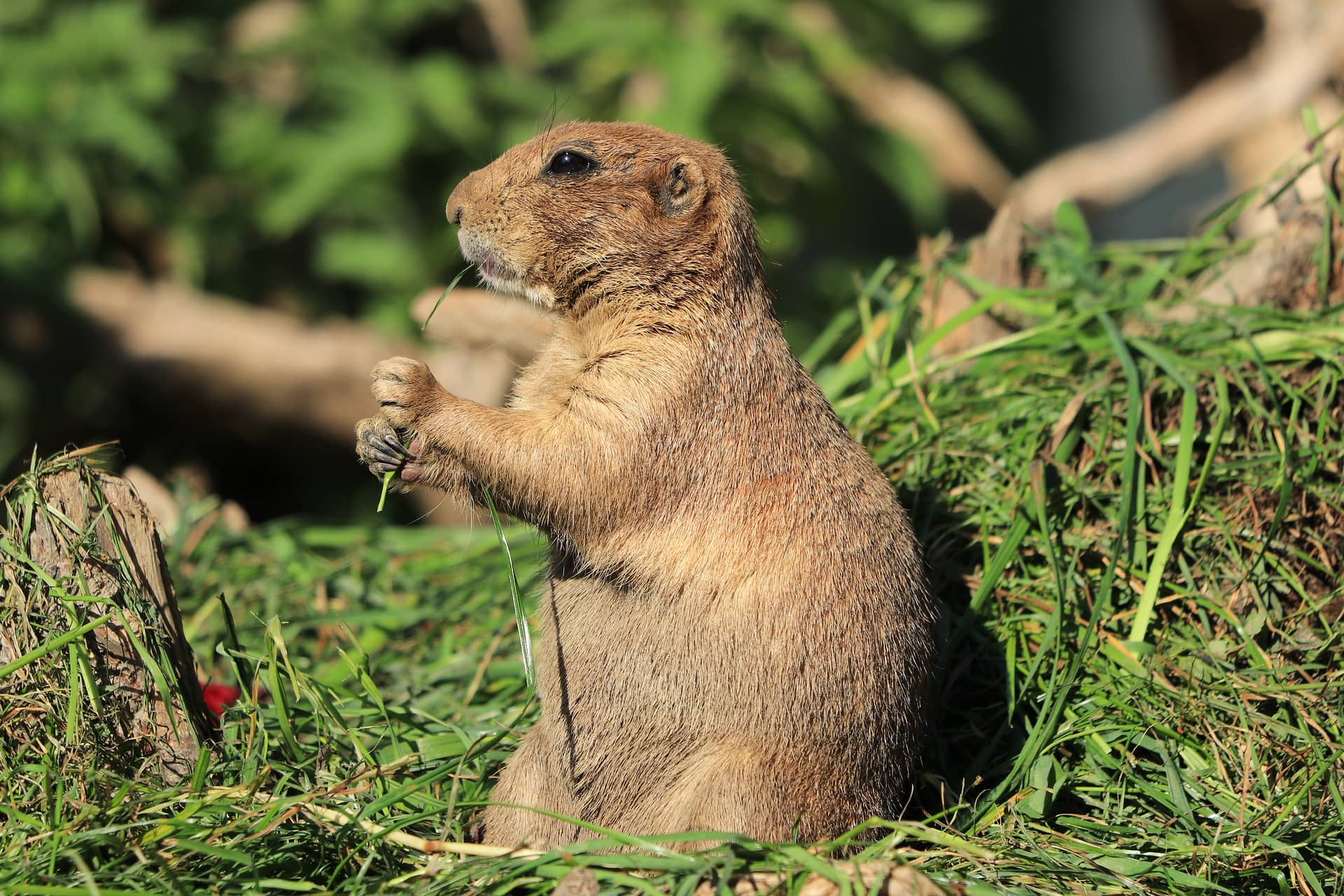
Поскольку луговые собачки в основном травоядные, в дикой природе они питаются в основном травой, корнями, кактусами и чертополохом. Они живут в очень засушливых регионах с небольшим количеством осадков и поэтому получают влагу в основном из растений, которыми питаются. В некоторых случаях они также могут есть насекомых, червей и даже навоз американских бизонов.
Луговые собачки — ключевой вид.
Как и летучие мыши, луговые собачки являются ключевыми видами. Из-за их значительного влияния на местные ландшафты и дикую природу исчезновение луговых собачек станет плохой новостью для местной экосистемы. Без них экосистема выйдет из равновесия, что приведёт к гибели множества растений и животных, которым помогают луговые собачки.
От луговых собачек зависят сотни видов животных. Луговые собачки играют важную роль в улучшении качества почвы и возвращении азота в почву с их экскрементами. Благодаря этому в прериях растёт более питательная растительность, от которой выигрывают многие животные. Луговые собачки также являются важным источником пищи для множества хищников, таких как ласки, рыси, орлы, ястребы и черноногие хорьки.
Луговая собачка Ганнисона — единственный вид луговых собачек с 40 хромосомами.
Луговая собачка Ганнисона (Cynomys gunnisoni) в основном обитает в регионе, граничащем с юго-восточной Ютой, юго-западной Колорадо, северо-восточной Аризоной и северо-западной частью Нью-Мексико. Из пяти видов луговых собачек только у луговой собачки Ганнисона 40 хромосом, а не 35, как у других видов. У этого вида глаза расположены ближе к бокам головы, что обеспечивает ему хорошее периферийное зрение.
Чернохвостые луговые собачки не впадают в спячку.
Чернохвостые луговые собачки не впадают в зимнюю спячку, в отличие от большинства видов луговых собачек. Вместо этого они впадают в оцепенение — инстинктивное поведение, похожее на спячку, но длящееся лишь непродолжительное время. Во время оцепенения у них значительно снижаются частота сердечных сокращений, дыхания и пищеварения. Этот инстинкт позволяет им сохранять энергию до тех пор, пока условия окружающей среды не позволят им снова выйти на поиски пищи.
Они защищают свою территорию от других луговых собачек.
Луговые собачки тратят много сил на обустройство своего жилища. Неудивительно, что они яростно защищают его от других луговых собачек, не входящих в их группу. Самцы дерутся с другими самцами за свою территорию, бодаясь, кусая и пиная друг друга. Иногда в этих драках участвуют даже самки.
Они убивают сусликов, чтобы устранить конкурентов.
Хотя луговые собачки — социальные животные, они недружелюбно относятся к своим соперникам. Территории луговых собачек иногда могут пересекаться с территориями других видов сусликов. Луговые собачки убивают сусликов белок, чтобы устранить своих соперников. Поскольку они травоядные и не едят тела этих сусликов, они оставляют их на съедение хищным птицам.
Луговые собачки подвержены чуме плотоядных.
Один из самых интересных фактов о луговых собачках заключается в том, что они подвержены чуме. Они могут быть переносчиками блох, которые являются возбудителями бубонной и дикой чумы, передающейся домашним животным и людям. В результате чума в значительной степени способствует сокращению популяции луговых собачек.
Многие фермеры не любят их из-за их разрушительных наклонностей.
Когда луговые собачки роют норы и осваивают новые территории, они иногда уничтожают посевы и сельскохозяйственные угодья. Из-за этого фермеры и другие землевладельцы считают их вредителями и активно охотятся на них или избавляются от них с помощью ядов и других методов.
Некоторые виды луговых собачек находятся под угрозой исчезновения.
Из-за увеличения количества городских территорий, дорог и сельскохозяйственных угодий ареал луговых собачек сокращается. Кроме того, на их численность влияют такие факторы, как распространение болезней и неконтролируемая охота на луговых собачек. Из-за такого резкого сокращения численности некоторые виды луговых собачек, например мексиканская луговая собачка и луговая собачка Юты, находятся под угрозой исчезновения.
В 2008 году Центр по контролю и профилактике заболеваний США снял запрет на торговлю и охоту на них.
В 2003 году из-за угрозы распространения чумы и других зоонозных заболеваний Центр по контролю и профилактике заболеваний США ввёл запрет на перевозку, охоту и торговлю луговыми собачками. Хотя Центр по контролю и профилактике заболеваний США и Управление по санитарному надзору за качеством пищевых продуктов и медикаментов отменили запрет на охоту и торговлю с 2008 года, в некоторых штатах до сих пор действуют законы о защите луговых собачек.


